Talk

What is Creative Ops? A Practical Guide to Building a More Efficient Creative Workflow
Let’s be honest: "Creative Operations" sounds like the most boring job title in the world. It conjures images of spreadsheets, Gantt charts, and a person who hovers over your shoulder asking for a status update when you’re just trying to find the right shade of blue.
For years, the creative world has treated "operations" as the enemy of "creativity." We believe in the myth of the messy, chaotic genius. We think that great ideas can't be contained by a system.
This belief is not just wrong; it's the single biggest reason why creative teams burn out, miss deadlines, and fail to deliver on their potential.
As a leader who has built and scaled creative operations for teams at Yelp and AOL, I’ve learned a counter-intuitive truth: A great operational system doesn't kill creativity; it unleashes it. A well-designed creative operations (Creative Ops) system is like the unseen engine of a race car. It’s the boring, meticulously engineered part that allows the brilliant driver to take risks, push the limits, and win the race. It handles the chaos so the creators can focus on what they do best: creating.
This isn't a theoretical guide. This is a practical, no-BS playbook for building a Creative Ops engine that will help your team ship better work, faster.
The Creative Ops Engine
Why Most Creative Teams Are Built to Fail
Most creative teams aren't teams; they're a collection of talented individuals in a state of perpetual reaction. They are drowning in what I call "The Three C's of Creative Chaos":
- Chaotic Intake: Requests come from everywhere—Slack DMs, hallway conversations, last-minute emails. There’s no single door, so the team is constantly being pulled in a dozen different directions. Briefs are incomplete, priorities are unclear, and the person who shouts the loudest gets the attention.
- Cloudy Communication: Feedback is scattered, stakeholders appear out of nowhere in the final hour with game-changing notes, and no one is quite sure which version of the file is the "final_final_v3_for_real_this_time.jpg." This leads to endless, soul-crushing rework.
- Constant Context-Switching: Without a clear system, creatives are forced to be their own project managers. They spend a huge portion of their day chasing down assets, clarifying feedback, and providing status updates, instead of doing the deep, focused work they were hired for.
A Creative Ops system is designed to systematically eliminate these three chaos agents.
The Creative Ops Engine: The Three Pillars of an Efficient System
A world-class Creative Ops system is built on three pillars. You don't need expensive software to start; you just need a commitment to the process.
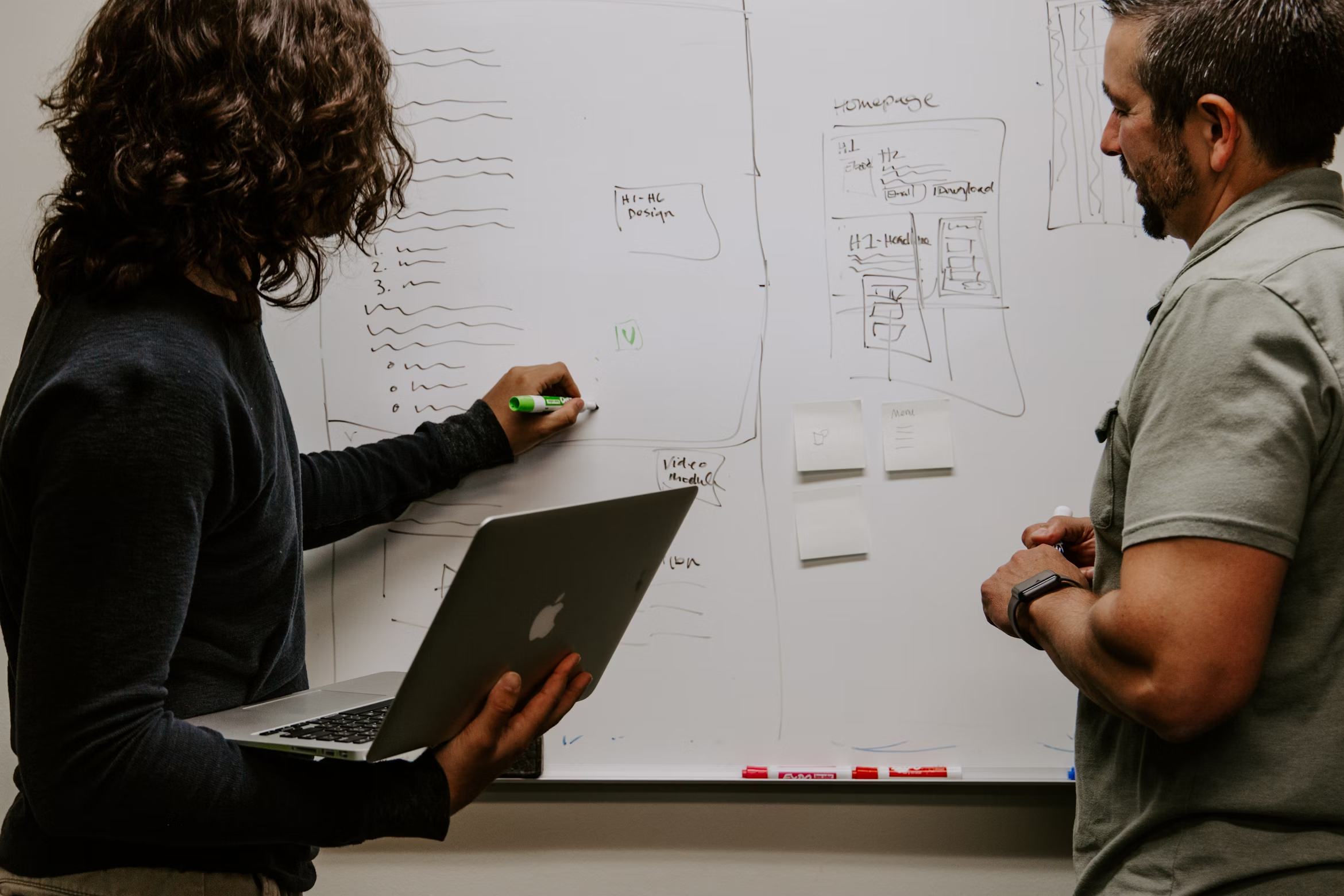
Pillar 1: The Single Front Door (The Intake System)
The first and most important step is to close all the side doors. There must be one, and only one, way to submit a request to the creative team.
- The Tool: This can be a simple Google Form, a Jira ticket, a dedicated Asana project, or a service like Trello. The tool is less important than the rule.
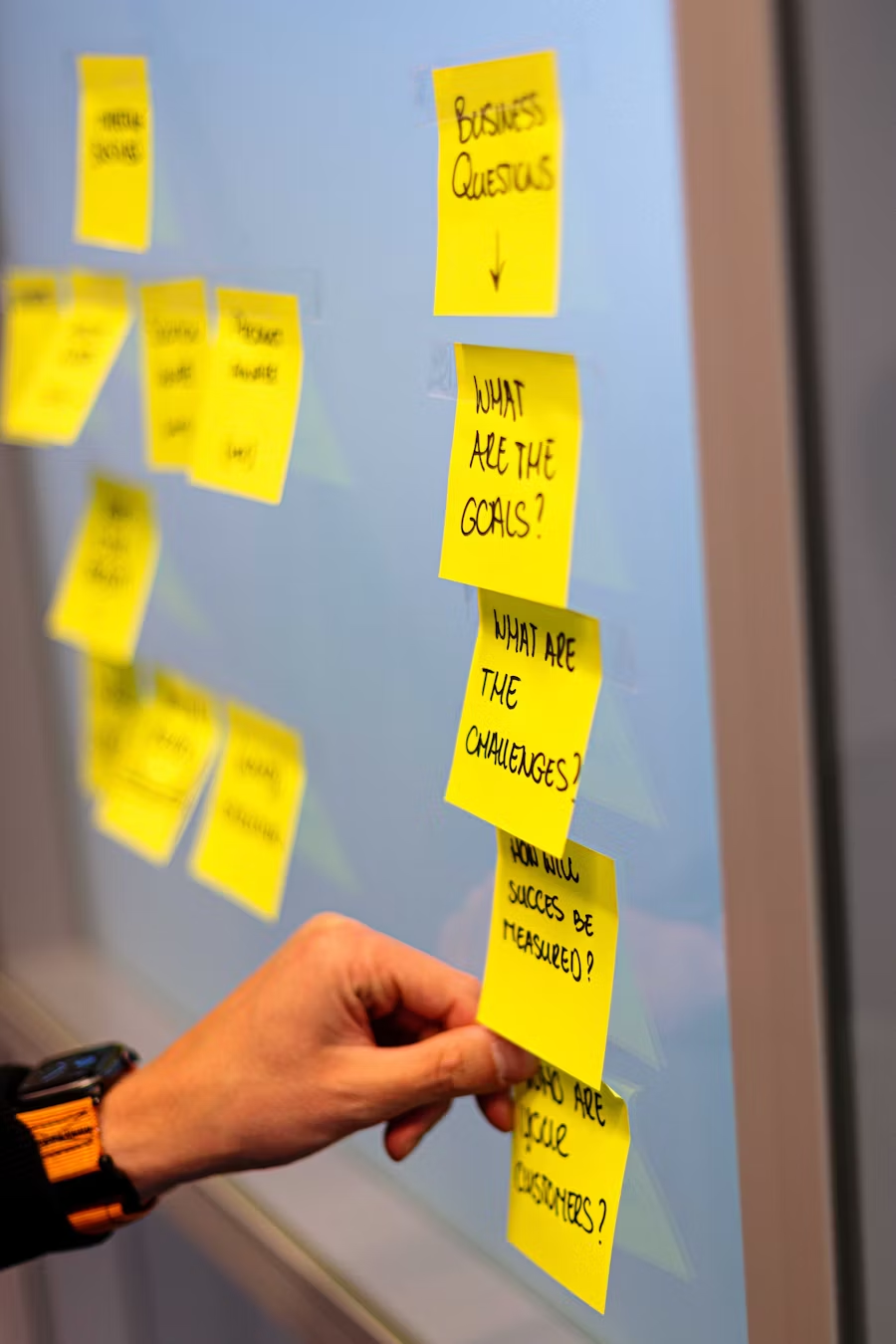
- The "Strategic Brief" as the Key: The price of admission through this front door is a completed Strategic Brief. This is a non-negotiable requirement. The brief must answer the core questions before it can be accepted by the team:
- What is the business objective?
- Who is the target audience?
- What is the single most important message?
- What does success look like (the primary KPI)?
- The Triage Process: Designate one person (a Creative Producer or Project Manager) to be the "gatekeeper" of the front door. Their job is to review all incoming briefs, reject any that are incomplete, and work with the stakeholder to clarify the request before it ever reaches a creative's desk.
How this helps: This simple pillar immediately eliminates chaotic intake. It forces your partners to think strategically before they make a request, and it protects your team from half-baked, urgent-but-not-important fire drills.

Pillar 2
The Single Source of Truth (The Project Hub)
Once a project is accepted, it must live in a single, centralized location that is accessible to all stakeholders. This is your project hub, and it is the antidote to cloudy communication.
- The Tool: A project management tool like Asana, Notion, Trello, or Jira is essential here. The goal is to choose one and get universal buy-in.
- The "Project Card" as the Hub: Every project gets a single "card" or "page" in the system. This card is the home for everything related to that project:
- The final, approved Strategic Brief.
- A link to the folder with all relevant assets.
- A clear timeline with key milestones and deadlines.
- Designated owners for each task.
- A dedicated space for all feedback and comments.
- The Rules of Engagement:
- If it's not in the hub, it doesn't exist. This is the most important rule. All communication, feedback, and approvals must happen on the project card. This kills the endless email chains and Slack DMs.
- Clear Statuses and Owners: Every task must have a clear status (e.g., To Do, In Progress, In Review, Approved) and a single person who is responsible for the next action.
How this helps: The project hub creates radical clarity. It eliminates the "who's got the ball?" problem. Stakeholders can self-serve status updates by simply looking at the project board, which frees up your creatives from having to constantly provide them. It makes the entire process transparent and accountable.
The Rhythms of Review (The Feedback & Cadence System)
The final pillar is about creating a predictable rhythm for the work itself. This is how you eliminate constant context-switching and create space for deep, focused creative time.
- The System: You implement a series of recurring, structured meetings and "no-meeting" blocks.
- The Key Rituals:
- The Weekly "Intake & Triage" Meeting (Monday, 30 mins): The Creative Ops lead meets with key stakeholders to review all new briefs submitted through the "Front Door." They prioritize the week's work and give stakeholders clear timelines. Creatives do not attend this meeting.
- The Creative "Kickoff": Once a project is prioritized, a brief kickoff is held with the assigned creative to ensure they understand the goals and can ask questions.
- The "Creative Review" Cadence: Establish a set time for creative reviews (e.g., Tuesdays and Thursdays at 2 PM). Stakeholders know that this is when they will see work and be expected to provide consolidated, written feedback in the project hub. This ends the ad-hoc "can you just take a quick look at this?" interruptions.
- "Maker Days" (No-Meeting Blocks): Protect your creatives' most valuable resource: long, uninterrupted blocks of time. Designate specific days or afternoons as "Maker Days" where no internal meetings can be scheduled. This allows for the deep focus required for high-quality creative work.
How this helps: This system creates a predictable, professional rhythm. It respects the creative process by building a structure around it, protecting your team from chaos and allowing them to do their best work.
Pillar 3
Putting It All Together
The Virtuous Cycle
When you combine these three pillars—The Single Front Door, The Single Source of Truth, and The Rhythms of Review—you create a virtuous cycle.
Better briefs from the Intake System lead to less rework. Clearer communication in the Project Hub leads to faster approvals. Protected focus time from the Rhythm System leads to higher quality creative. This higher quality work delivers better results, which in turn earns the creative team more trust and a more strategic seat at the table, leading to even better, more strategic briefs.
Building a Creative Ops system is the most powerful investment you can make in your team's success and sanity. It's the unseen architecture that allows brilliant ideas to be built, shipped, and scaled, not just dreamed of. It’s how you stop being a reactive service and start being an engine for growth.
Good To Know
Bouwen jullie ook een e-commerce webshops?

Bouwen jullie alleen in Webflow of ook met andere tools?
Wat gebeurt er na de oplevering van mijn website?
Wat houdt CRO precies in en wat levert het op?
Wat zijn AI agents en hoe kunnen ze ons helpen?
Kan ik ook één onderdeel (bijv. alleen development) afnemen?
Werken jullie ook samen met interne teams of bureaus?