Talk

The Perfect Creative Brief Template (And Why It Will Save Your Next Project
Let's be honest: no one likes writing creative briefs.
For stakeholders, they feel like bureaucratic homework. For creatives, they are often a source of immense frustration—a document that is somehow both too long and not nearly specific enough, filled with corporate jargon and vague requests like "make it pop."
And yet, I am here to tell you something you might not believe: The creative brief is the single most important document in the entire creative process. A great brief is a masterpiece of strategic clarity. It is the blueprint for success, the North Star for the entire team, and the single best predictor of a successful outcome. A bad brief is the opposite: a one-way ticket to endless rework, missed deadlines, and soul-crushing creative friction.
After leading over 100 campaigns and building creative systems at companies like Yelp and IAC, I’ve seen it all. I've seen the one-sentence Slack DMs masquerading as briefs, and I've seen the 20-page slide decks that say absolutely nothing.
Through it all, I've developed, tested, and refined a single creative brief template that has become my non-negotiable starting point for every single project, from a national brand campaign to a single blog post. It's designed to be simple enough to complete quickly, but rigorous enough to force strategic thinking. It is the tool that I use to align teams, clarify goals, and set a project up for success before a single creative idea has been conceived. And today, I'm giving it to you.
The Philosophy
Why This Template Works
This template is built on a simple philosophy: A creative brief is a problem statement, not a solution. Its job is to define the what and the why, so that the creative team can focus all of their energy on figuring out the how.
It forces you to answer the hardest questions upfront, turning a vague desire ("We need a video") into a sharp, strategic objective ("We need a video that explains our new feature to our 'Second-Career Storyteller' persona in a way that makes them feel empowered, not overwhelmed").
This template is divided into two sections: The Strategic Foundation (The "Why") and The Creative Guardrails (The "What"). Let's break it down.
The Ultimate Creative Brief Template
Section 1: The Strategic Foundation (The "Why")
(This section must be completed before the brief is even assigned to a creative. This is the work of the project stakeholder.)
1. The Primary Business Objective: What is the one thing this project needs to achieve?
- Instructions: Be specific and choose only one primary goal. This is the metric that will determine if this project is a success or a failure.
- Bad Example: "Increase brand awareness."
- Good Example: "Drive 1,000 sign-ups for our upcoming webinar." or "Increase the adoption of our new 'X' feature by 15% among existing users."
2. The Target Audience: Who are we talking to?
- Instructions: Go beyond demographics. Choose one of our core personas. What is their mindset? What is their biggest pain point related to this project? What do they currently believe?
- Example: "We are talking to 'The Frustrated Assistant.' They are time-poor, cynical about marketing, and are looking for a tool that will demonstrably save them time, not just add another task to their plate."
3. The Single Most Important Message (The SMIM): What is the one, single idea we want them to take away?
- Instructions: This is the hardest and most important part. If the audience remembers only one thing, what is it? It must be simple, concise, and written in human language.
- Bad Example: "Our product leverages AI-driven synergy to optimize workflows."
- Good Example: "This feature will save you 5 hours of manual work every week."
4. The Desired Action: What do we want them to do after seeing this?
- Instructions: Be specific. This is your primary call-to-action.
- Example: "Click the link to download the new template." or "Sign up for the free trial."
(This section defines the sandbox for the creative team. It provides the necessary constraints to guide their thinking without dictating the solution.)
5. The Tone of Voice: How should this feel?
- Instructions: Choose 3-5 keywords from our Brand Voice Guide. Should it be more "Witty" or more "Authoritative"? More "Inspirational" or more "Direct"?
- Example: "Encouraging, Witty, Practical. It should feel like a smart, helpful peer giving you a pro-tip, not a corporation selling you a feature."
6. The Mandatories & The Taboos: What must be included, and what must be avoided?
- Instructions: This is for the non-negotiables. Be specific.
- Mandatories (Must-Haves):
- "Must include the official #CampaignHashtag."
- "The final call-to-action button must say 'Start Your Free Trial'."
- "The legal disclaimer must be visible in the footer."
- Taboos (Absolute Don'ts):
- "Do not use stock photography of people in suits."
- "Avoid using the word 'synergy' or other corporate jargon."
- "Do not make any direct comparisons to Competitor X."
7. Key Deliverables & Specs: What are we actually making?
- Instructions: List every single asset required. Be ruthlessly specific about the formats and specs.
- Example:
- "One (1) 60-second video ad (16:9 ratio)."
- "One (1) 15-second cutdown for Instagram Stories (9:16 ratio)."
- "Three (3) static image ads for Facebook (1:1 ratio)."
- "All accompanying social media copy."
8. The Budget & Timeline: What are the real-world constraints?
- Instructions: Be transparent. This information is critical for scoping the creative appropriately.
- Budget: "Total production budget is $X,XXX."
- Timeline:
- First Draft Due: [Date]
- Stakeholder Review & Feedback Due: [Date]
- Final Assets Due: [Date]
- Launch Date: [Date]
9. Stakeholders & Approvers: Who needs to see this, and who has the final say?
- Instructions: List by name and title. This eliminates the "swoop and poop" from a mysterious executive in the final hour.
- Example:
- Project Lead: [Name]
- For Review: [Name 1], [Name 2]
- Final Approval: [Name 3 - The One Decider]
Section 2: The Creative Guardrails (The "What")
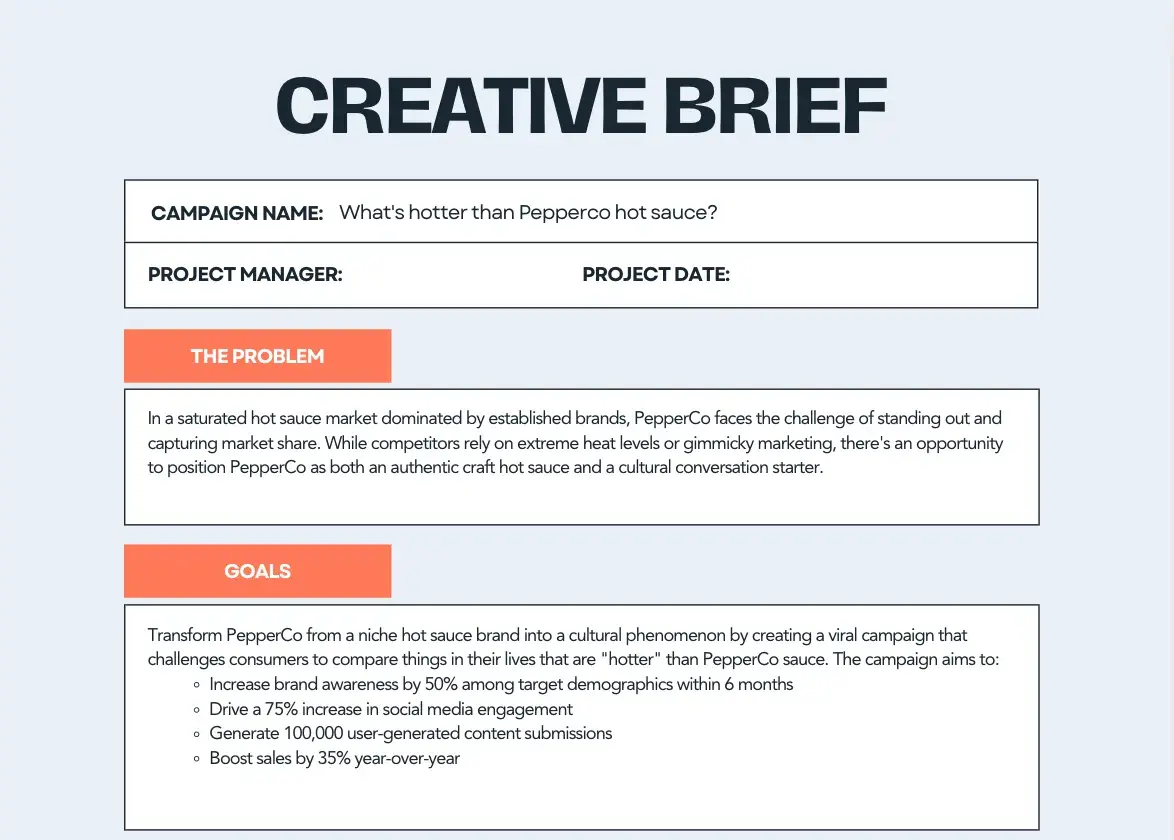
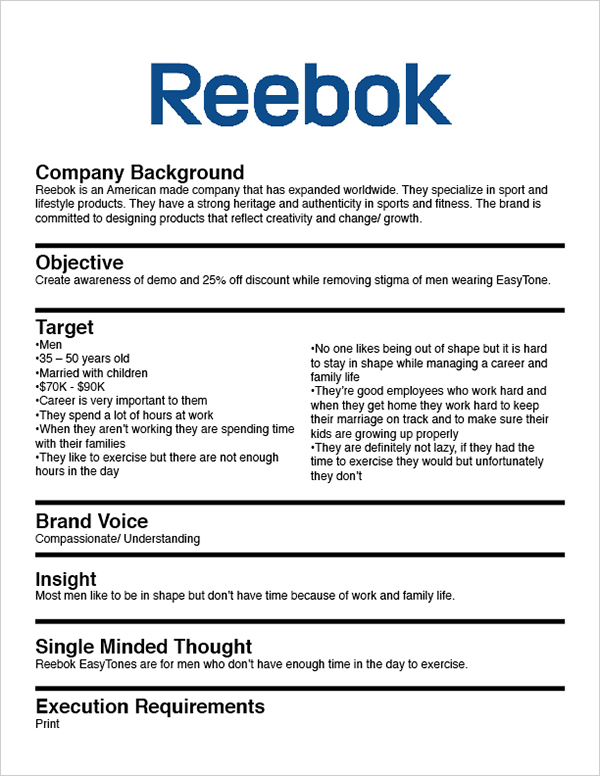
How to Use This Template to Transform Your Workflow
This document is more than just a form to be filled out; it's a tool for cultural change.
- Make it Non-Negotiable: This is the most important step. As a leader, you must create a hard and fast rule: "If it's not in a brief, the work doesn't begin." Hold the line. If a request comes in via Slack, your only response should be a friendly, "This sounds exciting! Please fill out the brief template so we can get started." You are not being difficult; you are being professional.
- Use it as a Collaboration Tool, Not a Weapon: The brief should not be a document that one team throws at another. The best way to use it is collaboratively. The stakeholder (e.g., a Product Manager) should fill out Section 1. Then, in the project kickoff meeting, the Creative Lead should review it and fill out Section 2 with the stakeholder. This ensures everyone is aligned and has a shared understanding of the project's goals and constraints from the very beginning.
- Treat it as a Living Document: A brief is not set in stone. If new information arises or the project's scope changes, the brief should be the first thing that gets updated. It is the single source of truth that keeps the project on the rails.
By implementing this single document, you will eliminate countless hours of rework, reduce creative friction, and empower your team to focus their brilliant energy on solving the right problem. It is the single most effective tool I have found for aligning strategy and creativity, and for shipping great work, consistently.
Good To Know
Bouwen jullie ook een e-commerce webshops?

Bouwen jullie alleen in Webflow of ook met andere tools?
Wat gebeurt er na de oplevering van mijn website?
Wat houdt CRO precies in en wat levert het op?
Wat zijn AI agents en hoe kunnen ze ons helpen?
Kan ik ook één onderdeel (bijv. alleen development) afnemen?
Werken jullie ook samen met interne teams of bureaus?